Category Archives: Business Trips

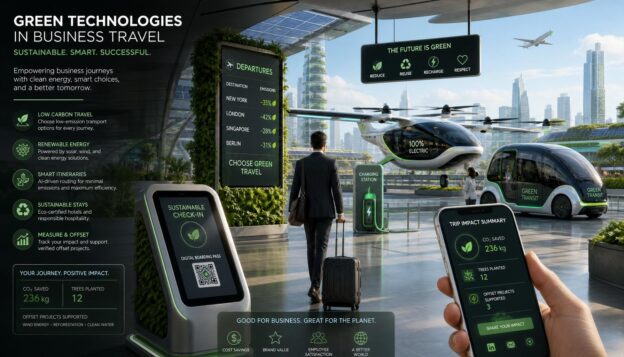
Leveraging Future Technologies for Eco-friendly Business Travel

Emerging technologies have logical, transformative potential to revolutionize the business travel industry. These technologies can help in creating solutions that promote sustainability, efficiency, and improve user experiences. Some of these technologies include digital platforms, artificial intelligence (AI), big data, blockchain, and virtual/augmented reality.

1. Digital Platforms: Digital platforms, like travel booking and management apps, can streamline processes, ensuring quick and easy access to travel-related services such as hotel and flight bookings, car hire, and real-time updates on travel itinerary changes. This improved efficiency can lead to money and time savings for businesses.

2. Artificial Intelligence and Machine Learning: AI and machine learning can greatly enhance personalization and efficiency in the business travel industry. For example, AI chatbots can provide 24/7 customer service, solving issues in real-time. Machine learning algorithms can also help personalize travel experiences by learning user preferences and suggesting tailored options.

3. Big Data Analytics: Big data can provide valuable insights into traveler behavior and preferences, enabling businesses to make data-driven decisions and strategies. Additionally, analytics can be used to track and reduce carbon footprints, contributing to sustainability efforts.

4. Blockchain Technology: Blockchain can bring transparency, security, and efficiency to processes like booking, payment, and rewards systems. It can help eliminate fraud, streamline payments, and simplify the process of managing loyalty points across various platforms.

5. Virtual and Augmented Reality: Virtual reality (VR) and augmented reality (AR) can be used to give travelers a preview of their destination, hotel room, or meeting venue. This eliminates unpleasant surprises, ensuring that the trip goes as smoothly as possible. Moreover, VR and AR can be used to conduct virtual meetings, reducing the need for travel and hence contributing to sustainability.

6. Green Technology: Finally, innovations in green technology, such as electric vehicles and sustainable aviation fuel, can also have a significant impact on the business travel industry. These technologies can help reduce carbon emissions, making business travel more eco-friendly.

By integrating these technologies, the business travel industry can improve efficiency while lowering its environmental impact. However, for widespread adoption, businesses should also focus on improving digital literacy, safeguarding user data, and providing continuous technical support.
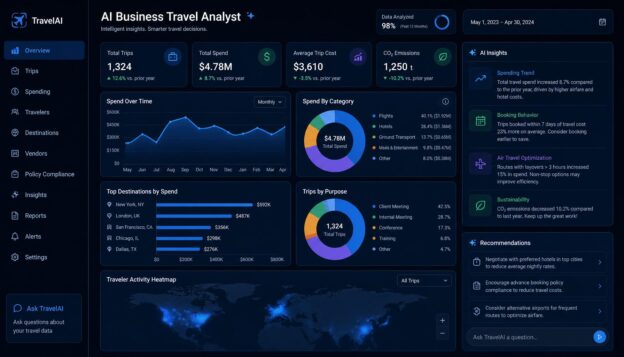

Harnessing the Power of AI for Smarter Business Trips

Artificial Intelligence (AI) technology, with its ability to process and infer from massive amounts of data, is revolutionizing various industries, including business tourism or corporate travel. AI has introduced remarkable developments that make the planning, execution, and evaluation of business trips easier, efficient, smart, and personalized. Here is how AI is influencing different stages.

1. Planning: AI-powered travel apps use machine learning algorithms to provide personalized travel recommendations based on the traveler’s previous booking behavior, preferences, and real-time variables like weather or traffic forecasts. Using natural language processing, AI can also expedite processes such as location search and hotel booking.

2. Air ticket and hotel booking: AI in the form of intelligent virtual assistants, or chatbots, can handle repetitive tasks such as booking tickets and hotels, saving human agents’ time for more complex tasks. They can sort through endless options to find the best deals and flight options based on set preferences.

3. Expense Management: AI can automate the expense management process by capturing, tracking, and analyzing expenses in real-time. It can automatically categorize, match, and validate the expenses with travel bookings and credit card transactions, which streamlines the process and reduces fraud and errors.

4. Real-time assistance and customer service: Chatbots and virtual assistants provide 24/7 support in addressing common questions, making changes in reservations, and providing real-time alerts for flight updates. Using natural language processing and understanding, these bots can understand user behavior and intent to meet their demands promptly.

5. Travel safety: AI can forecast safety risk and disruption by analyzing massive data sets, which aids in risk assessment. It can proactively alert the traveler and adjust travel plans in case of any potential danger.

6. Evaluation: AI and machine learning algorithms can process and analyze vast amounts of data to produce reports, patterns, and trends. This helps companies in making data-driven decisions to improve travel policy compliance, create cost-effective travel plans, and enhance traveler satisfaction. AI can also utilize predictive analytics to forecast travel cost, influencing budget allocations and financial forecasting.

7. Personalization: AI provides personalized recommendations to travelers based on their past behavior, preferences, and real-time factors, thus offering an improved user experience.

8. Sustainability: AI can help in optimizing travel plans to reduce CO2 emissions. By analyzing different travel options and their environmental impact, businesses can opt for more eco-friendly travel options.

In conclusion, AI is not just revolutionizing business travel, but is set to lead towards a more agile, efficient, and user-centric corporate travel eco-system. The balance it brings in cost-effectiveness, personalization, safety, and convenience is transforming how business trips are planned, executed, and evaluated.

The Impact of Big Data on Modern Business Strategies

In an era where data is considered more valuable than oil, it is not surprising to see businesses harnessing the power of big data to drive their operations and plans. With massive volumes of information being generated every second, big data is a potential goldmine that businesses can mine to gain crucial insights and craft effective strategies.

One of the main reasons why big data is valuable for companies lies in its potential to make the decision-making process much more precise, faster, and more efficient. According to research from McKinsey, companies that leverage big data and analytics have a productivity and profit advantage of 5-6% over their competitors.

Renowned hotel chain, Marriott International resorts to big data analytics to gain a competitive edge in the hospitality industry. During business trips, Marriott leverages big data to know their customers better, improve customer loyalty, optimize operations, and ultimately, boost profits. They use the collected data to identify the preferences of each guest and personalize their offers accordingly—a strategy that has undeniably contributed to their success.

Another example is the multinational IT services company IBM. The corporation uses big data to assess and predict trends, customer needs, and performance metrics during their business trips. IBM leverages big data analytics for business travel planning by analyzing real-time flight data, weather reports, and historical data to make better-informed decisions that could save on travel expenses while maximizing efficiency and productivity for their traveling employees.

Similarly, the taxi sharing app, Uber, uses big data during business trips of their employees to offer dynamic pricing. This strategy involves adjusting prices based on real-time supply and demand trends. Uber accomplishes this by analyzing large volumes of data, including driver availability, current rider demand, and even local events in the area.

These examples are just the beginning – there are countless instances across various industries of businesses leveraging big data to their advantage. Indeed, big data is revolutionizing the way businesses strategize and operate, offering invaluable insights that have never been available before. It has redefined the business landscape, providing companies with newfound areas for growth, optimization, and innovation.

In conclusion, businesses that understand the importance of harnessing big data in their strategies are likely to stay ahead of the curve and navigate their way successfully through today’s fast-paced and data-driven world. With big data, companies can make more informed decisions, streamline operations, adapt to changing market trends, and potentially achieve their objectives with higher precision and efficiency.