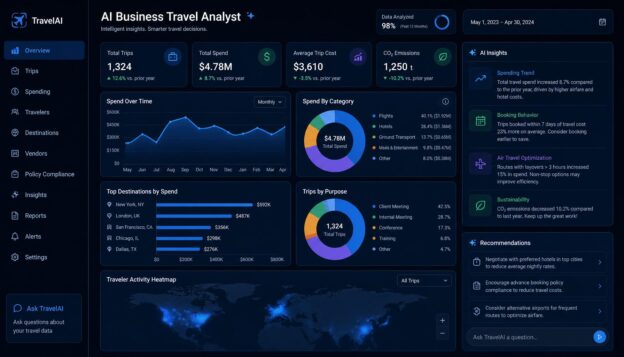
Artificial Intelligence (AI) technology, with its ability to process and infer from massive amounts of data, is revolutionizing various industries, including business tourism or corporate travel. AI has introduced remarkable developments that make the planning, execution, and evaluation of business trips easier, efficient, smart, and personalized. Here is how AI is influencing different stages.
1. Planning: AI-powered travel apps use machine learning algorithms to provide personalized travel recommendations based on the traveler’s previous booking behavior, preferences, and real-time variables like weather or traffic forecasts. Using natural language processing, AI can also expedite processes such as location search and hotel booking.
2. Air ticket and hotel booking: AI in the form of intelligent virtual assistants, or chatbots, can handle repetitive tasks such as booking tickets and hotels, saving human agents’ time for more complex tasks. They can sort through endless options to find the best deals and flight options based on set preferences.
3. Expense Management: AI can automate the expense management process by capturing, tracking, and analyzing expenses in real-time. It can automatically categorize, match, and validate the expenses with travel bookings and credit card transactions, which streamlines the process and reduces fraud and errors.
4. Real-time assistance and customer service: Chatbots and virtual assistants provide 24/7 support in addressing common questions, making changes in reservations, and providing real-time alerts for flight updates. Using natural language processing and understanding, these bots can understand user behavior and intent to meet their demands promptly.
5. Travel safety: AI can forecast safety risk and disruption by analyzing massive data sets, which aids in risk assessment. It can proactively alert the traveler and adjust travel plans in case of any potential danger.
6. Evaluation: AI and machine learning algorithms can process and analyze vast amounts of data to produce reports, patterns, and trends. This helps companies in making data-driven decisions to improve travel policy compliance, create cost-effective travel plans, and enhance traveler satisfaction. AI can also utilize predictive analytics to forecast travel cost, influencing budget allocations and financial forecasting.
7. Personalization: AI provides personalized recommendations to travelers based on their past behavior, preferences, and real-time factors, thus offering an improved user experience.
8. Sustainability: AI can help in optimizing travel plans to reduce CO2 emissions. By analyzing different travel options and their environmental impact, businesses can opt for more eco-friendly travel options.
In conclusion, AI is not just revolutionizing business travel, but is set to lead towards a more agile, efficient, and user-centric corporate travel eco-system. The balance it brings in cost-effectiveness, personalization, safety, and convenience is transforming how business trips are planned, executed, and evaluated.